The Water Crisis: Pakistan and the Global Struggle for Clean Water — and Its Solutions
“Water is life” is not just a saying, but an undeniable truth. Yet, despite claims of progress in the 21st century, a large portion of the world’s population remains deprived of this basic necessity. While modern cities waste filtered water down the drain, women and children in underprivileged regions walk miles carrying containers of contaminated water that often leads to deadly diseases.
Access to clean water is one of the greatest challenges facing humanity today — and Pakistan stands at the centre of this crisis.
Global Perspective: A Silent Emergency
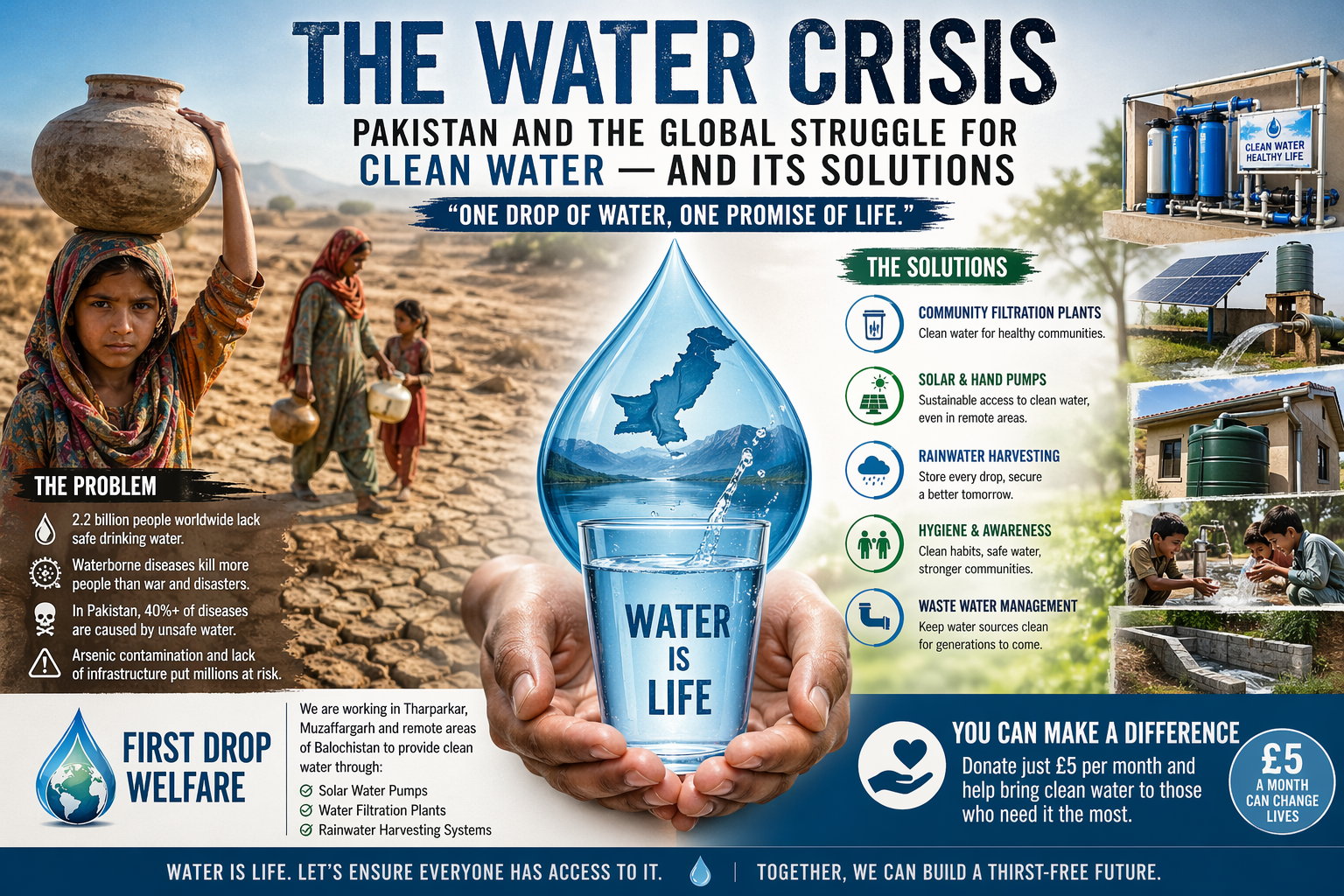
According to the World Health Organization and UNICEF, around 2.2 billion people worldwide lack access to safely managed drinking water. This means that one in four people is forced to consume water that may be contaminated with human waste, industrial chemicals, or harmful bacteria.
As a result, millions of children die each year from waterborne diseases such as cholera, typhoid, dysentery, and diarrhoea. This is a silent epidemic — one that claims more lives than wars and disasters.
Pakistan’s Situation: Drifting Towards Water Scarcity
Pakistan is among the countries facing severe water stress. The Pakistan Council of Research in Water Resources has repeatedly warned that without immediate action, the country could face extreme water shortages by 2040.
The problem is not just the quantity of water, but also its quality — particularly in rural and underdeveloped regions:
- Arsenic Contamination: Large areas in Punjab and Sindh have groundwater with dangerously high levels of arsenic, leading to cancer and severe skin diseases.
- Lack of Infrastructure: Regions such as Tharparkar, Cholistan Desert, remote parts of Balochistan, and mountainous villages in Khyber Pakhtunkhwa lack proper water supply systems.
- Waterborne Diseases: Over 40% of illnesses and deaths in Pakistan are linked to unsafe water, severely affecting children’s growth and development.
How Can We Provide Clean Water to Underserved Communities?
While the challenge is significant, it is not insurmountable. Practical and sustainable solutions include:
1. Community Water Filtration Plants
Instead of waiting for large-scale government funding, NGOs can install small-scale reverse osmosis (RO) plants in villages. These systems can purify contaminated and saline groundwater.
2. Solar and Hand Pumps
In off-grid areas such as Thar, solar-powered pumps can transform lives by bringing clean water from deep underground and storing it in accessible tanks.
3. Rainwater Harvesting
In regions like Pothohar and parts of Balochistan, collecting rainwater through rooftop systems and underground storage tanks can provide a year-round supply of clean water.
4. Hygiene Awareness Campaigns
Providing clean water alone is not enough. Communities — especially women — must be educated on safe storage, hygiene practices, and boiling or filtering water before use.
5. Small-Scale Wastewater Management
Basic drainage solutions such as soak pits and simple treatment systems can prevent contamination of drinking water sources in rural areas.
First Drop Welfare: Every Drop Counts
First Drop Welfare is actively working towards solving this crisis. We believe that a single drop of clean water can break the cycle of poverty and disease.
Our organisation is currently operating in some of Pakistan’s most drought-affected regions — including Tharparkar, Muzaffargarh, and rural Balochistan. We have:
- Installed solar water pumps providing doorstep access to thousands of families
- Established water filtration plants transforming unsafe water into safe drinking water
- Built rainwater storage systems that serve communities during dry seasons
Your Role
We often wait for government action, but real change starts with individuals. If each capable person contributes towards installing even a single hand pump or household water filter, the future of Pakistan can change.
By supporting organisations like First Drop Welfare, you can be part of this life-saving mission.
Donate just £5 per month and make a lasting impact.
Final Message
“One drop of water, one promise of life.”